The Creative Curriculum® for Pre-K - Criterion 3.1
Loading navigation...
Criterion 3.1: Learning Environment
Curriculum materials foster a classroom environment that supports engagement and learning.
Indicator 3.1a
Curriculum materials support a classroom system and physical environment that are developmentally appropriate, child-centered, and engaging.
The Creative Curriculum for Pre-K materials meet expectations for supporting a developmentally appropriate classroom system and physical environment (3.1a).
The materials provide a well-developed, research-based rationale for how the classroom environment and daily schedule promote developmentally appropriate, child-centered, and engaging learning experiences. In Volume 1: The Foundation (Learning Environment section), the curriculum draws on developmental research to explain how intentionally designed physical spaces support autonomy, curiosity, self-regulation, and cognitive growth. Teachers receive clear guidance on arranging child-accessible shelves, organizing defined learning centers, and using visual cues to create predictable, safe, and engaging environments. The curriculum grounds these recommendations in research showing that well-organized spaces foster a sense of belonging and allow children to deeply engage in exploration, play, and collaborative learning.
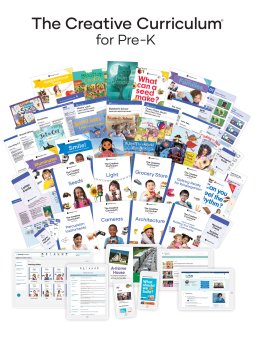
The materials also provide a clear, research-informed explanation of why a predictable, developmentally appropriate schedule is essential. The First Six Weeks: Building Your Classroom Community guide offers evidence-based strategies for structuring the daily routine, such as arrival, Morning Meeting, Small Group instruction, Choice Time, and end-of-day reflections—that balance teacher-led instruction with child-initiated exploration. Predictable routines reduce anxiety, support self-regulation, and create a learning flow that aligns with best practices in early childhood education. Across Teaching Guides like Seeds, Grocery Store, Light, and Buildings, these routines are consistently modeled to promote independence and smooth transitions throughout the day.
In practice, the curriculum embeds these principles across multiple components:
Defined interest areas (Blocks, Dramatic Play, Art, Discovery, Library) are arranged intentionally to support exploration, collaboration, and engagement (Foundation Volume 2: Interest Areas).
Classroom jobs and routines introduced in The First Six Weeks build responsibility and autonomy (e.g., line leader, materials helper, greeter).
Environmental print—including labels, signs, schedules, and children’s work—is strategically placed at eye level to promote literacy, ownership, and meaningful engagement.
Adaptable furniture and pathways ensure that the space is safe, accessible, and responsive to diverse learners, including children who need quiet or sensory-regulation spaces.
Studies (e.g., Seeds, Light, Grocery Store) incorporate real-world, hands-on investigations that deepen engagement through experimentation and thematic play.
These structural and environmental features work together to create a classroom system where children are active participants, capable decision-makers, and engaged learners. The environment functions as a “third teacher,” promoting independence and supporting developmental, social-emotional, and cognitive growth.
Overall, The Creative Curriculum for Pre-K materials demonstrate a cohesive, research-based approach to designing classroom systems and physical environments that actively support children’s development, independence, and engagement. The materials provide clear guidance on classroom layout, predictable routines, intentional use of interest areas, and thoughtfully structured schedules. These elements work together to create safe, accessible, and responsive learning environments in which children are empowered to explore and collaborate.
Indicator 3.1b
Curriculum materials include a range of manipulatives, resources, tools, and suggested ‘found’ materials to enhance learning.
The Creative Curriculum for Pre-K materials meet expectations for including materials that enhance learning (3.1b).
The materials provide a comprehensive, well-developed system for selecting, organizing, and using manipulatives, tools, and accessible materials to support children’s learning across developmental domains.
Foundational Guidance
Volume 1: The Foundation (Learning Environment section) explains how to select, organize, label, and rotate materials to support independence and exploration.
Materials are intentionally placed at child height and labeled with pictures/words to promote autonomy.
Curriculum Guide (pp. 36-49)
Blocks – unit blocks, tubes, boxes, hard hats, vehicles
Dramatic Play – props, clothing, household items
Toys & Games – manipulatives for counting, sorting, matching
Art – a variety of tools, papers, “found” recyclables
Library – multilingual books, puppets
Discovery – magnifiers, natural objects, science tools
Sand & Water – scoops, funnels, containers
Music & Movement, Cooking, Technology areas with developmentally appropriate materials
Study-Specific Manipulatives
Seeds Study – soil, planters, recycled cups, magnifying glasses, tweezers, real seeds.
Light Study – flashlights, mirrors, prisms, translucent items.
Grocery Store Study – play money, scales, empty packages, bags, clipboards.
Cameras Study – old cameras, lenses, photo albums, magazines.
Intentional Teaching Experiences (ITEs)
Each ITE card lists a materials section identifying required items.
Includes both classroom staples and recommended “found” items (fabric scraps, cardboard tubes, bottle caps, natural materials).
Offers differentiation options tied to material use.
Cultural & Linguistic Responsiveness
Bilingual books, multicultural props, and invitations for families to send in artifacts or photos.
Environmental print displayed in multiple languages.
Affordability & Accessibility
Frequent use of low-cost, easily sourced materials: recycled containers, boxes, jars, packaging, and natural objects.
Recommendations for substituting materials when certain items are unavailable.
Overall, The Creative Curriculum for Pre-K materials provides a comprehensive, intentional system for selecting and using manipulatives, tools, and found materials to enhance children’s learning across developmental domains. Clear foundational guidance, detailed interest-area recommendations, and study-specific materials ensure that resources are purposeful, accessible, and aligned to instructional goals. The consistent inclusion of low-cost, readily available materials, along with flexible substitution options, supports equitable implementation across settings. Additionally, integrating culturally and linguistically responsive materials reinforces children’s identities and home experiences. Together, these elements demonstrate a well-supported, coherent approach to materials use that promotes independence, engagement, and meaningful learning.